
You’re missing a tooth, and you’ve done your research. You know dental implants are considered the gold standard for tooth replacement, but then you hear about the cost. Dental implants do cost more upfront than a bridge or a denture. It’s a significant investment, and we get that you want to make sure it’s the right one.
At Garfield Dental Group in Traverse City, MI, we help patients work through this exact question every day. Dr. Kristen Guptill and Dr. Noor Al Mansi understand that cost is a real concern. They also understand that the true value of an implant isn’t measured in months. It’s measured in decades.
This guide breaks down the long-term value of dental implants in Traverse City, MI. We’ll look at why they last, what they prevent, and why so many patients consider them the smartest investment they’ve ever made in their smile.
Reframing the Conversation: From Cost to Value
Let’s start by acknowledging the obvious. Dental implants cost more upfront than other tooth replacement options. A traditional bridge or a denture will cost less on the day you get it.
The question that changes everything is what will that option cost you over the next 20 years? That’s the difference between cost and value. Cost is what you pay today. Value is what you get over time.
A cheaper option that needs replacing every five years isn’t actually cheaper. It’s a recurring expense. An implant that lasts for decades, protects your jawbone, and never needs replacing is a one-time investment.
Viewed that way, the math shifts. Let’s break it down.
Why Dental Implants Last So Long
Implants last so long because of one remarkable process: osseointegration.
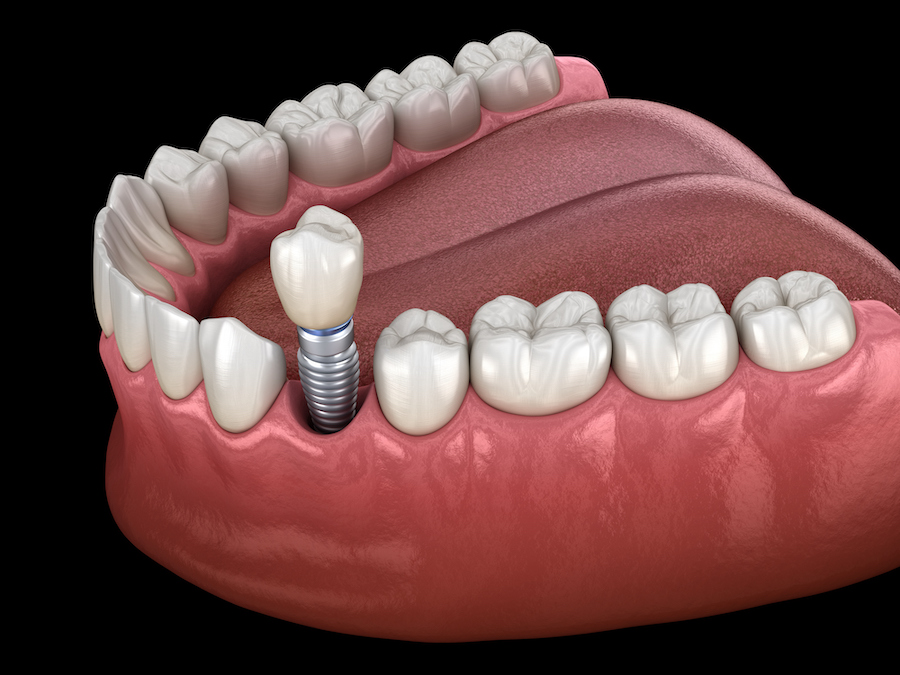
Here’s how it works. A dental implant is a small titanium post that’s placed into your jawbone. Titanium has a unique property. Your body accepts it as its own. Over three to six months, your jawbone grows around the implant and fuses with it.
This creates an incredibly strong bond. The implant becomes a permanent part of your jaw, just like a natural tooth root. It can withstand the full force of chewing. It doesn’t loosen or shift, and because it’s made of titanium, it doesn’t decay or break down over time.
That’s why implants can last 25 years or more. With proper care, many last a lifetime.
Compare that to other options. A dental bridge typically needs replacement every 10 to 15 years. Dentures need relining or replacement every five to eight years. Each replacement costs money. Each replacement means more appointments and more time in the dental chair.
An implant is a one-time solution. You invest once, and you benefit for decades.
The Hidden Costs of Other Options
The upfront cost of an implant is easy to see. But the hidden costs of other options are harder to spot. Let’s look at what you’re really paying for with a bridge or a denture.
The True Cost of a Dental Bridge
A traditional bridge replaces a missing tooth by anchoring to the two healthy teeth on either side. To do that, they have to grind down those healthy teeth to make room for crowns.
That’s permanent damage to teeth that didn’t have a problem, and it sets off a chain reaction. The altered teeth are now weaker. They’re more susceptible to decay and fracture. They may eventually need root canals or crowns.
A bridge also doesn’t stimulate your jawbone. Without a tooth root to signal the bone, the bone in that area begins to shrink. Over time, this can lead to a sunken facial appearance and changes to your bite. It can also compromise the teeth that support the bridge.
So the “cheaper” bridge isn’t just a one-time cost. It can start a cycle of dental work that lasts for years.
The True Cost of Dentures
Dentures are a time-tested solution for missing teeth. Modern dentures look and fit better than ever. But they still have limitations.
Dentures rest on your gums. They don’t replace the tooth root, so they don’t stimulate the jawbone. Bone loss continues underneath them. Over time, the bone shrinks, and the dentures no longer fit properly. You need relines and adjustments. Eventually, you need new dentures.
Dentures can also slip and shift when you eat or speak. That can be embarrassing and uncomfortable. Many denture wearers avoid certain foods because they’re hard to chew. They may also feel self-conscious about their smile.
Again, the initial cost is lower. But the long-term costs add up.
The Domino Effect of Doing Nothing
One more option to consider is doing nothing. It might seem like the cheapest choice, but a missing tooth doesn’t just stay a missing tooth. It affects your whole mouth.
Neighboring teeth begin to drift into the gap. The tooth opposite the gap starts to grow out of position. Your bite changes, jaw muscles compensate, and you may develop jaw pain, headaches, or TMJ issues.
The bone in the area also continues to shrink. The longer you wait, the more bone you lose. Eventually, you may need a bone graft before you can even consider an implant.
The cost of waiting is real. It’s measured in additional procedures, additional appointments, and additional expense.
How Implants Prevent Future Costs
Now let’s look at the other side of the equation. What do implants prevent?
- They preserve your jawbone. The implant replaces the tooth root, so it stimulates the bone just like a natural tooth. That means no bone loss. No sunken facial appearance. No changes to your bite.
- They protect your healthy teeth. An implant stands alone. It doesn’t rely on neighboring teeth for support. That means no grinding down healthy teeth. No weakening them. No starting a cycle of dental work.
- They restore full chewing power. You can eat whatever you want without worrying about slipping or discomfort. That’s a quality-of-life benefit that’s hard to put a price on.
- They require no special care. You brush and floss them just like natural teeth. No adhesives. No soaking. No special cleaners.
- They last for decades. You invest once, and you benefit for years. That’s long-term value.
We Do It All Here in Traverse City
When you choose Garfield Dental Group, you don’t have to travel to a separate specialist for implant surgery.
Dr. Kristen Guptill and Dr. Noor Al Mansi provide comprehensive implant care at our Traverse City office. From the initial consultation to the final restoration, we handle the entire process here.
That saves you time and hassle, and it means a team that knows you and your history coordinates your care.
A Team You Can Trust
Dr. Guptill practices dentistry differently. She believes the best care comes from blending deep clinical knowledge and genuine, unhurried listening. When you sit in her chair, you’re having a real conversation with a professional who cares. She’ll explain your options clearly, answer every question, and build a plan that reflects your priorities.
Dr. Al Mansi brings a fresh perspective and advanced training to the practice. Her passion for dentistry began at a young age, inspired by her grandmother, a retired dentist. She’s dedicated to clinical excellence and continually enhances her skills through ongoing education in implant dentistry and advanced treatment techniques.
Together, they provide the skill, experience, and compassion you want in an implant provider.
Serving Traverse City and Beyond
Your Traverse City dentist is conveniently located in Traverse City and serves patients in Garfield Township, Acme, Elk Rapids, Grand Traverse County, and all of Northern Michigan.
Whether you’re in Traverse City, Acme, or anywhere in the surrounding area, we’re here to help you explore your options and make the best decision for your smile.
Is an Implant Worth It? The Answer Is Personal
Only you can decide if a dental implant is worth the investment. It depends on your goals, your budget, and your timeline.
If you want a permanent solution that looks and feels like a natural tooth, an implant is the best option available. If you want to preserve your jawbone and protect your healthy teeth, an implant is the smart choice. An implant is the clear winner, lasting decades instead of years. The upfront cost is higher, but the long-term value is undeniable.
Ready to explore your options? Call Garfield Dental Group at (231) 518-3715 or request an appointment online. Dr. Guptill or Dr. Al Mansi will evaluate your smile, answer your questions, and help you decide if an implant is the right investment for you.